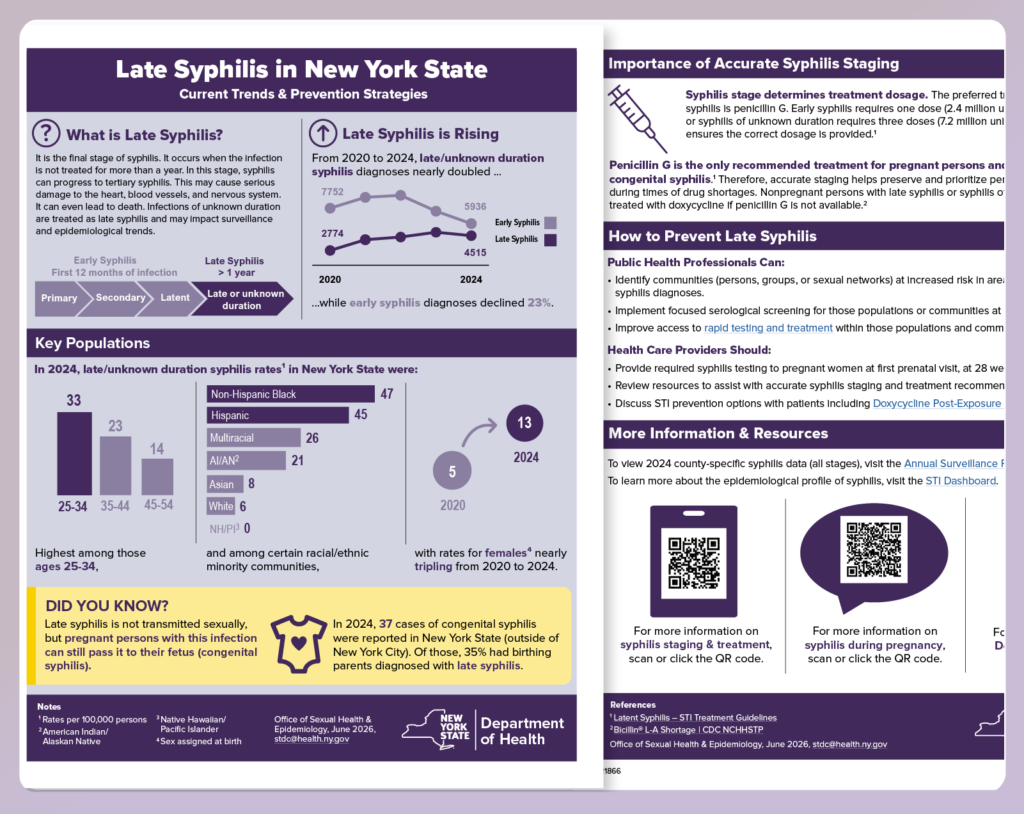
Late syphilis occurs when a syphilis infection remains untreated for more than a year and can cause serious heart, blood vessel and nervous system damage, and in some cases lead to death. This final stage of syphilis can also be passed to a fetus during pregnancy (congenital syphilis). While early syphilis declined from 2020 to 2024, late syphilis has nearly doubled. Age and racial disparities are seen in late syphilis rates, which are higher among those aged 25-34 and Black and Hispanic New Yorkers.
Key to proper treatment, syphilis staging is needed to determine the correct dosage of penicillin G. Accurate staging, and therefore dosing, helps manage the supply of penicillin G to ensure it is available for babies and pregnant persons who cannot receive other treatment options, such as doxycycline.
To learn more about syphilis staging, treatment and prevention, view the New York State Department of Health (NYS DOH) Office of Sexual Health & Epidemiology (OSHE) Late Syphilis DISH.
Stay tuned to the STI Dashboard Blog for future spotlights on sexually transmitted infections in New York State.
explore more data
Explore chlamydia, gonorrhea, and infectious syphilis trends at the statewide and county levels, stratified by age, race/ethnicity, sex, etc.