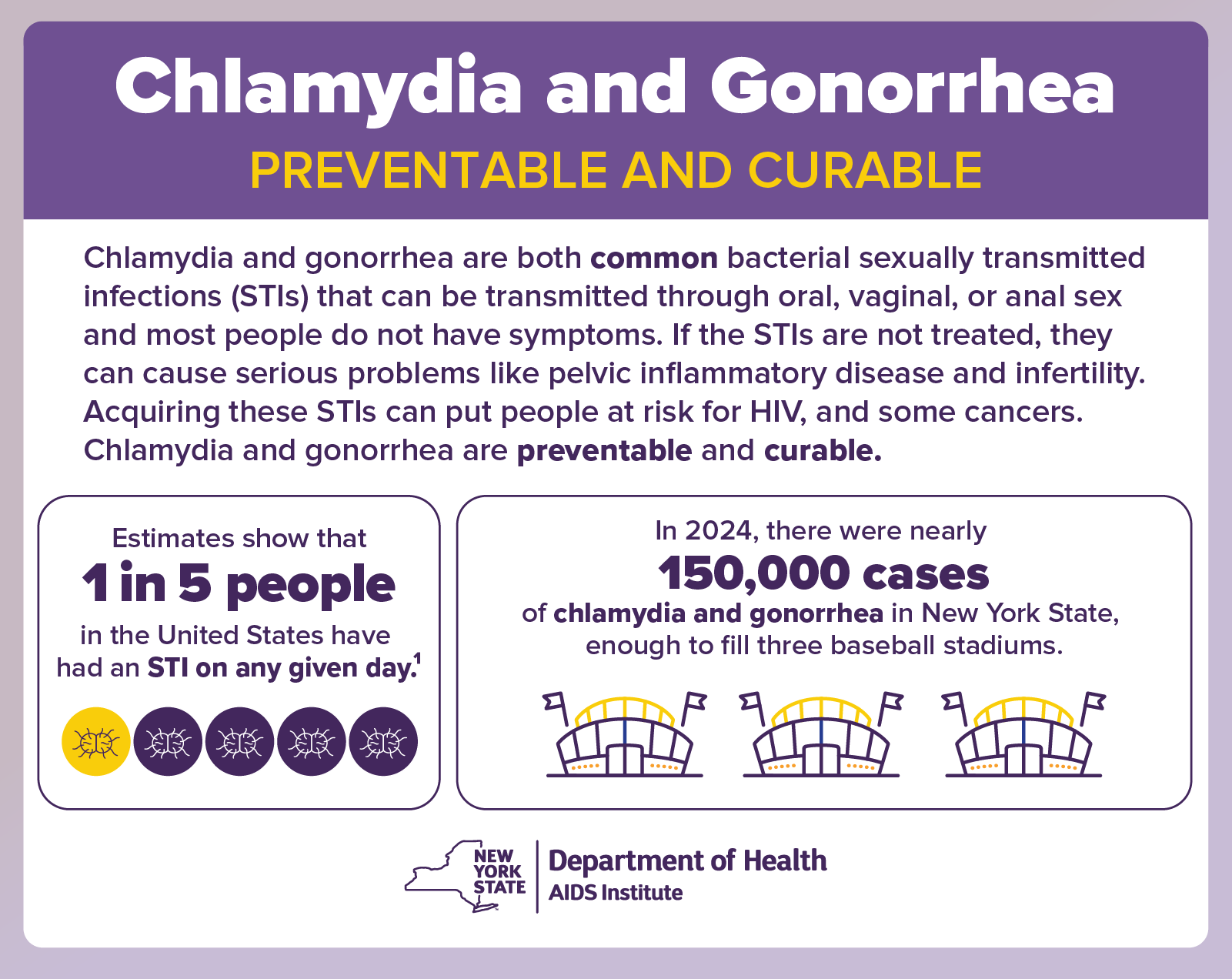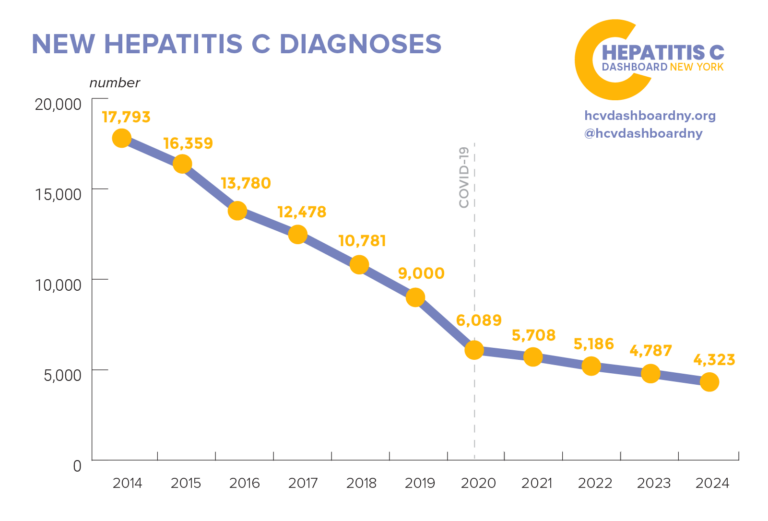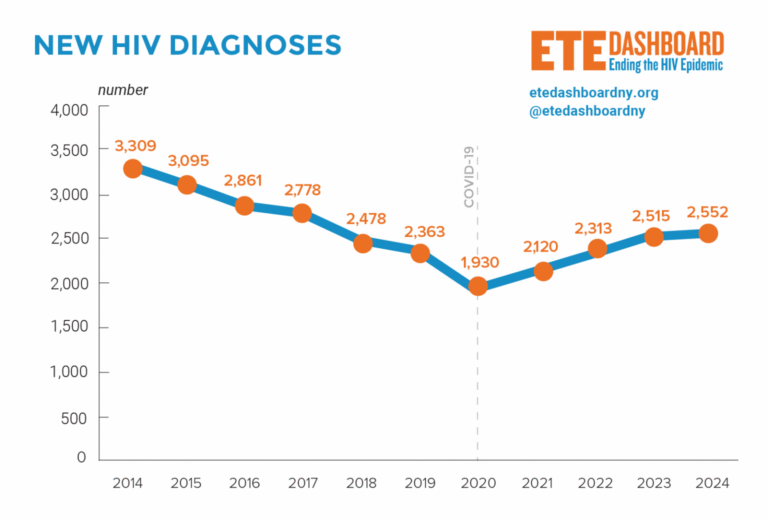
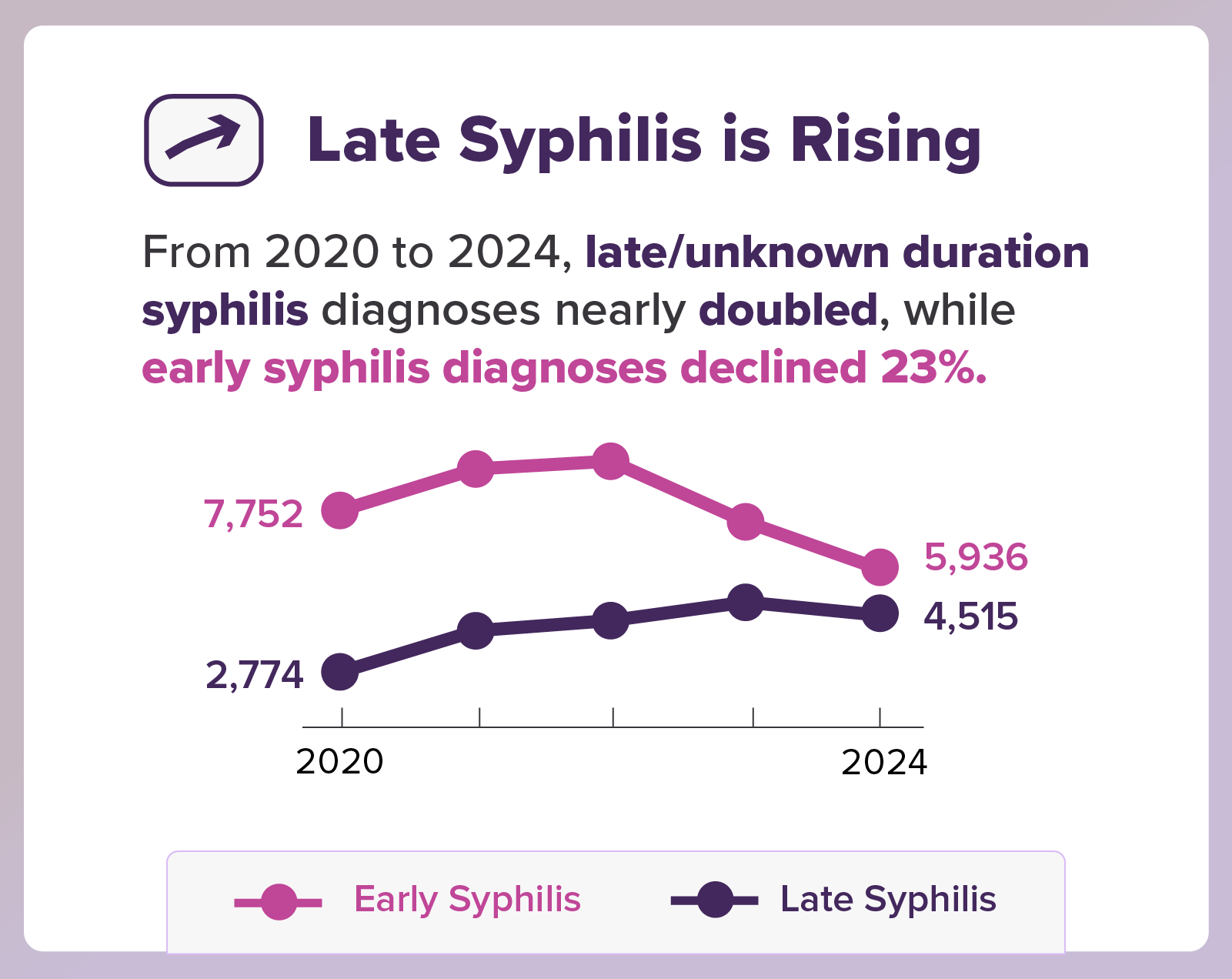
This dashboard presents interactive data visualizations of key trends of three major reportable sexually transmitted infections (STIs) in New York State, which include chlamydia, gonorrhea and syphilis.
new york state overview
chlamydia
There were 101,520 chlamydia diagnoses in 2024, a 7.1%decrease from 109,329 in 2023
gonorrhea
There were 44,965 gonorrhea diagnoses in 2024, a 2.5% decrease from 46,120 in 2023
syphilis
There were 2,360 primary and secondary syphilis diagnoses in 2024, an 18.3% decrease from 2,889 in 2023
chlamydia
In 2024, chlamydia rates across New York State declined for the first time since 2020.
Rates are higher for females than males, with the highest rates being among those aged 15-29.
Rates have remained highest among Black New Yorkers since 2014.
gonorrhea
Gonorrhea rates decreased for the first time since 2014.
Rates are higher among males than females, particularly those aged 25-34.
Rates have remained consistently higher among Black New Yorkers since 2014.
infectious syphilis
Infectious syphilis rates decreased for the second year in a row.
Rates are much higher among males than females.
Rates have remained consistently higher among Black New Yorkers since 2014.
Today, August 24, 2026 is Syphilis During Pregnancy Awareness Day. New York is the only state in the nation with a dedicated awareness day to combat congenital syphilis. This year, the state highlights its ongoing prevention, testing, and treatment efforts.
To ensure the prevention, treatment, and elimination of sexually transmitted infections, a more comprehensive community approach is needed. A syndemic approach addresses the intersecting epidemics of HIV/AIDS, STIs, viral hepatitis, and substance use, and therefore is better equipped to tackle the inequities and health disparities that persist in New York.