2024 sti surveillance data now available

2024 sexually transmitted infections (STI) surveillance data are now available on the STI Dashboard, providing the most up-to-date trends for chlamydia, gonorrhea, and syphilis across New York State. Overall, 2024 saw declines across all three of these reportable STIs, marking a potential shift after several years of increases.
high level figures for three stis from 2024 data
  • There were 101,520 chlamydia diagnoses in 2024, a 7.1% decrease from 2023, and the first decline in chlamydia rates statewide since 2020. Chlamydia diagnosis rates remain higher among females and New Yorkers ages 15–29.
  • There were 44,965 gonorrhea diagnoses in 2024, a 2.5% decrease from 2023, representing the first statewide decline in a decade. Rates continue to be higher among males, particularly those ages 25–34.
  • There were 2,360 primary and secondary syphilis diagnoses in 2024, an 18.3% decrease from the previous year, and the second consecutive year of declining infectious syphilis rates in New York State.

racial/ethnic disparities persist

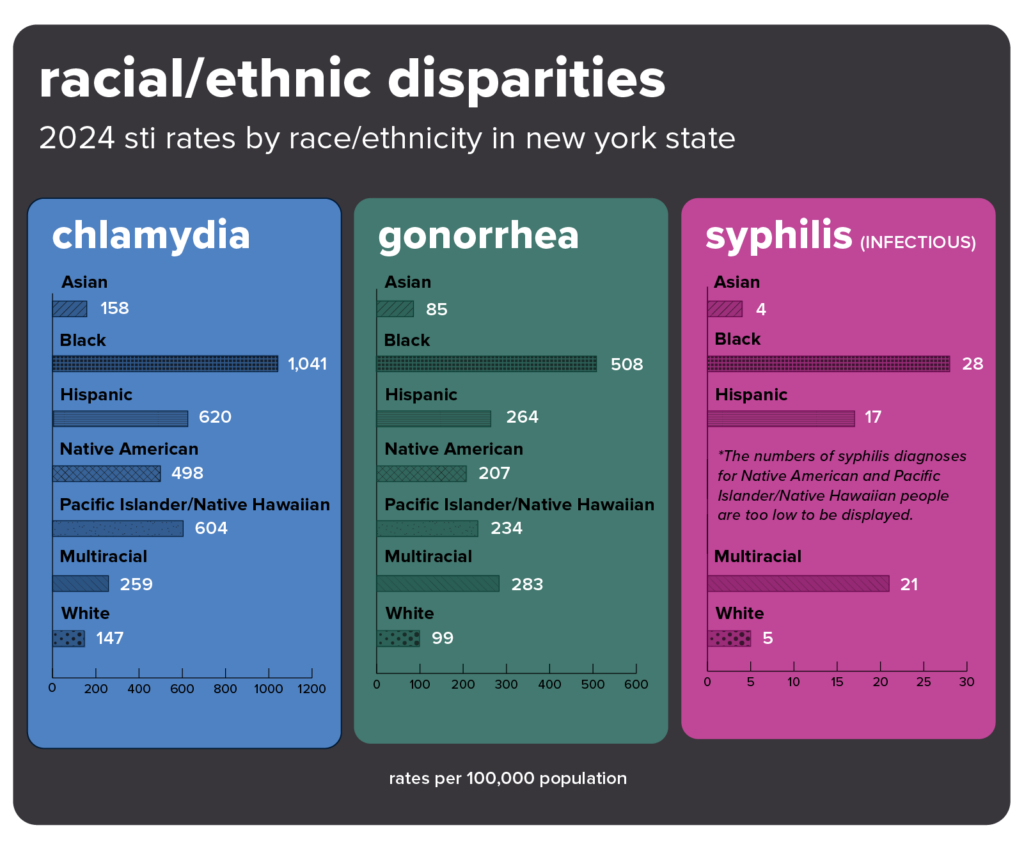
Across all three infections, persistent disparities by race/ethnicity remain a central concern. STI diagnosis rates have been consistently highest among Black New Yorkers, and 2024 data continue to reflect this pattern, highlighting the longstanding structural inequities in access to prevention, testing, and treatment.
Graphic shows chlamydia, gonorrhea and infectious siphiis rates by race / ethnicity.

Newly-added county-level race/ethnicity data

Alongside the 2024 data release, the dashboard now includes race/ethnicity data at the county level. This enhancement allows users to explore local disparities with greater precision and provides support for more targeted public health planning, community engagement, and resource allocation.
By making these data more granular and accessible, we aim to help partners better understand how STI trends vary across communities and to support data-driven responses that address persistent inequities.
While New York State data is now updated through 2024, the national-level and state comparison section of the dashboard only shows data through 2023. Once this data is released by the CDC, we will update the dashboard.
We invite users to share feedback on the dashboard’s visualizations and to let us know what additional data or features would be most useful for their work and communities.